Rapid Voice Prototyping for Audio Projects Without a Studio
wendyxyz733 | 03 Avgust, 2026 11:12
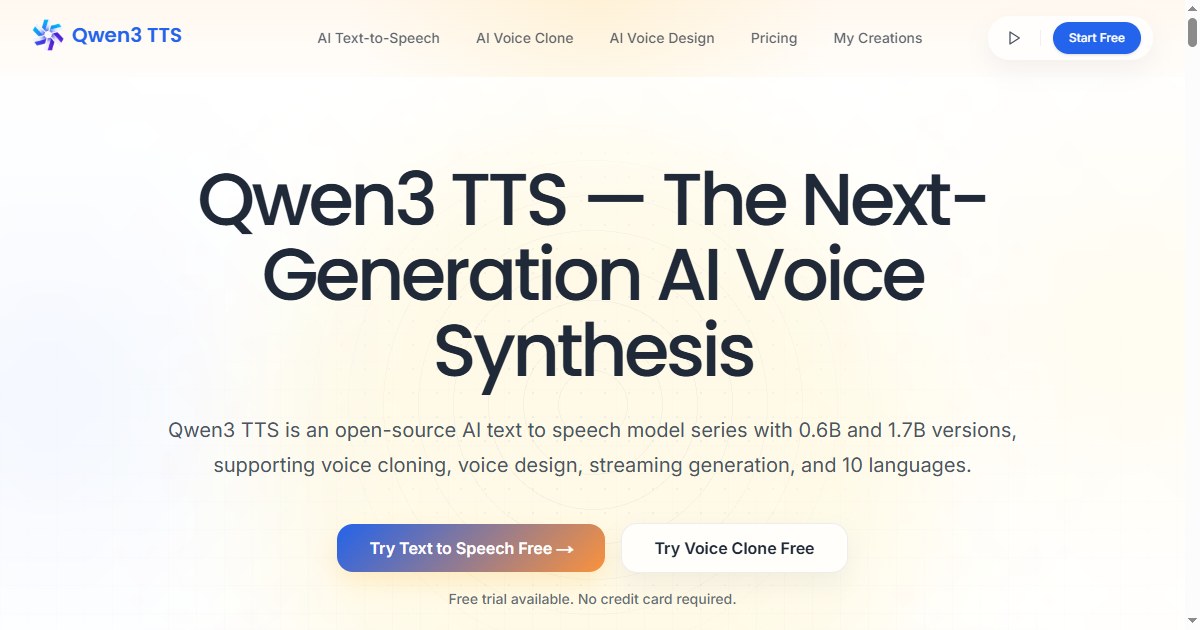 Qwen3 TTS official website view used as a factual visual reference.
Getting the voice right for an audio project often starts long before you hit record. Whether you're producing a podcast intro, an explainer video, or an e-learning module, the tone, pacing, and emotional quality of the voice can make or break the final result. But iterating on voice direction is slow when you rely solely on human voice talent. Booking sessions, sending scripts back and forth, and waiting for reads adds friction to the creative process.
This article outlines a practical workflow for voice prototyping using text-to-speech (TTS) tools. It's not about replacing voice actors; it's about moving faster during the concept and scripting phases, so you can make confident decisions earlier.
The Problem with Voice Testing in Pre-Production
When you're shaping an audio deliverable, you often need to answer questions like: Does a warmer voice feel more welcoming? Should the delivery be energetic or calm? Do we want a British accent or an American one? Answering these questions usually means auditioning talent or generating multiple takes from the same actor. Even with a fast freelancer, turnaround can take hours or days, and revisions add cost.
For teams operating on tight timelines or exploring several creative directions, there’s a clear gap: a way to rapidly test different voice styles and scripts before committing to final recordings.
A Workflow for Rapid Voice Prototyping
A lightweight prototyping step can fill that gap. Here’s a workflow that many content teams have adopted:
1. Draft the core script – Write the exact text you’ll need, even if it’s just a placeholder. 2. Identify the voice variables you want to test – Gender, age, accent, speaking rate, emotional tone. 3. Select a flexible TTS tool – Choose a tool that offers a range of voices and allows you to adjust parameters. Many modern AI-driven platforms fit here; one that’s gained attention for its breadth of options is Qwen3 TTS. According to its product page, Qwen3 TTS can generate natural-sounding speech, clone voices from short audio samples, and produce multilingual voiceovers. 4. Generate a few variations – Create 3–5 audio snippets using different voice profiles, but the same script. 5. Gather quick feedback – Share the clips with stakeholders or test listeners. Ask specific questions: Which voice feels more trustworthy? Which pacing keeps you engaged? 6. Refine and re-generate – Based on feedback, tweak the script or voice settings and produce updated prototypes within minutes.
This method turns voice direction into an iterative, low-cost design step rather than a big-budget decision.
Applying It to a Podcast Intro
Let’s ground this in a concrete example. Imagine you’re launching a new podcast about sustainable technology. You’ve written a 30-second intro that needs to sound optimistic but not over-hyped. Using the workflow above:
- You draft the intro script: “Welcome to Future Green, where we explore how technology is reshaping our planet’s future…”
- You decide to test three variations: a warm female voice with a moderate pace, an energetic male voice with a faster pace, and a calm, authoritative male voice with a slower delivery.
- You open a TTS tool—say, Qwen3 TTS—and, as its product page describes, select voices that match these profiles. You generate each version in under a minute.
- You send the three clips to three colleagues via chat, asking: “Which voice would make you want to keep listening?”
- Feedback comes back: the warm female voice feels most inviting, but the pace is a touch too slow. You adjust the speed setting and re-generate. The refined prototype becomes the reference track for the voice actor you’ll hire later.
The whole process takes less than an hour, and you’ve gotten actionable direction without spending a dime on talent yet.
What This Approach Doesn’t Solve
It’s important to be clear about the limits. Synthetic voices, even the most natural-sounding ones, can sometimes mispronounce niche terms, struggle with complex emotional nuance, or sound slightly flat in long-form content. They’re not a substitute for a skilled voice actor when the final product demands authentic human connection.
Also, cloned voices or custom voice styles may require careful attention to consent and usage rights. Treat TTS prototypes as internal design tools, not as final deliverables.
The value is in speed and flexibility during the ideation and scripting stages, not in production polish.
Next Steps: From Prototype to Production
If your team frequently faces voice-direction guesswork, consider adding a TTS prototyping step to your pre-production checklist. It pairs well with scriptwriting sessions and can prevent expensive re-records later.
There are several capable tools on the market. If you’d like to experiment with a platform that supports voice cloning, multilingual output, and a variety of voice styles, you can explore Qwen3 TTS. You might start by testing a few script drafts and seeing how small changes in voice tone shift the listener’s experience.
The goal isn’t to replace the human element but to arrive at it with greater clarity.
 Generalna |
 Permalink |
 Dodaj komentar |
 Trekbekovi (0)
Čestitamo
wendyxyz733 | 03 Avgust, 2026 11:02
Generalna |
Permalink |
Dodaj komentar |
Trekbekovi (0)
Meni
Pretraži
Kalendar
| « | Avgust 2026 | » | ||||
|---|---|---|---|---|---|---|
| Po | Ut | Sr | Če | Pe | Su | Ne |
| 1 | 2 | |||||
| 3 | 4 | 5 | 6 | 7 | 8 | 9 |
| 10 | 11 | 12 | 13 | 14 | 15 | 16 |
| 17 | 18 | 19 | 20 | 21 | 22 | 23 |
| 24 | 25 | 26 | 27 | 28 | 29 | 30 |
| 31 | ||||||